Table of Content
Title
Let Andrews Installation Group Manage & Simplify Your furniture Installation
Connect with our expert team today for efficient installation and moving services designed around your needs.
Contact Us!
Let Andrews Installation Group Manage Your furniture Installation
Connect with our expert team today for efficient installation and moving services designed around your needs.
Contact Us!
How Long Does Airport Seating Installation Take?
How Long Does Airport Seating Installation Take?
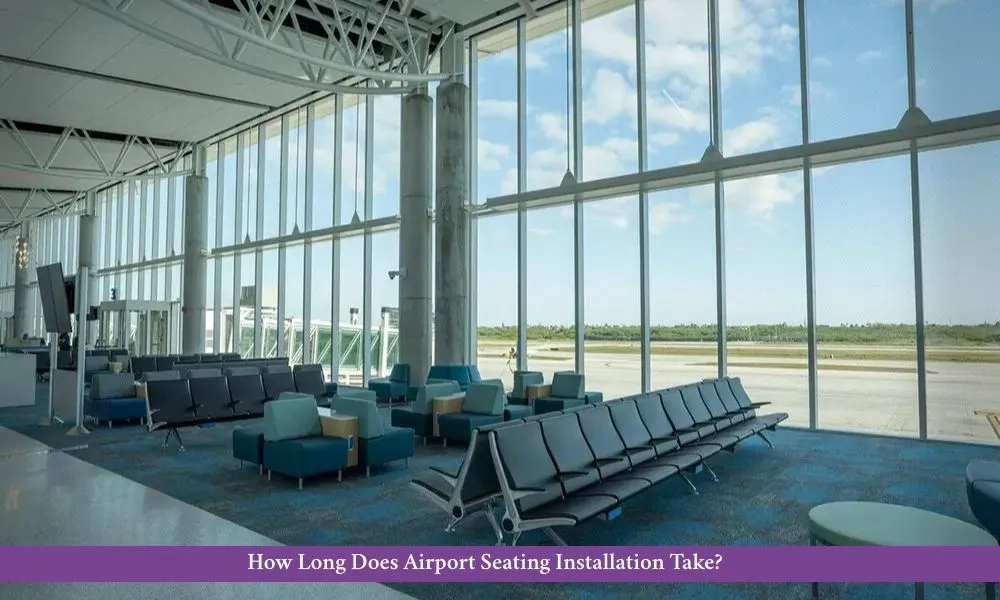
If you're managing a terminal renovation or new gate buildout, the seating installation timeline is usually one of the first questions on the table. And the honest answer is: it depends on more variables than most project managers expect.
A single gate area with standard fixed seating typically takes one to three days to complete. A full terminal buildout involving multiple concourses, mixed seating configurations, and restricted airside access can run anywhere from several weeks to a few months. The project scope, airport access rules, and coordination with other trades are the biggest factors.
Getting the timeline right matters. Delays in airport seating installation don't just affect the furniture vendor. They ripple into operational readiness, FAA compliance windows, and airline activation schedules.
Key Takeaways
Single-gate airport seating installation typically takes 1 to 5 days depending on access type; full concourse buildouts run weeks to months.
Airside access restrictions, overnight-only work windows, and security protocols are the biggest timeline drivers beyond raw seat count.
Mixed seating configurations with charging stations require electrical coordination before furniture installation can be completed.
Professional furniture installation services for airport environments include pre-install coordination, staging, phased sequencing, and documentation, not just physical assembly.
Crews with prior airside experience handle the access protocols, tool restrictions, and operational constraints without a learning curve on your timeline.
What Actually Determines Airport Seating Installation Time
Most people ask "how long does it take?" when the better question is, "what controls the timeline?" Here's what it actually does.
Project Scale and Seat Count
Scale is the most obvious driver, but it's more nuanced than total seat count alone. A 200-seat gate with a single seating configuration installs faster than a 150-seat mixed zone that includes standard passenger seating, charging lounge clusters, family areas, and accessibility-compliant configurations.
Each configuration type has different assembly sequences, anchoring requirements, and spacing specifications. More variety in the seating system means more complexity per square foot, not just more seats.
Airside vs. Landside Access
This is the variable that surprises people most. Airside installation, inside the secure zone beyond TSA checkpoints, operates under completely different rules than landside work.
Tools, materials, and personnel all require security clearance and badging. Deliveries can't happen on demand. Everything needs to be scheduled through airport operations in advance, often with 24 to 48-hour notice requirements. Work windows may be restricted to overnight hours when gate activity is low.
For airport seating installation projects operating fully or partially airside, the access requirements alone can add days to a timeline that would otherwise be straightforward.

Terminal Activity and Gate Availability
Active terminals don't pause for installation crews. Gates that are in use during the day are typically unavailable for installation until the last flight departs. That pushes a lot of airport furniture installation work into overnight windows, typically between midnight and 5 a.m.
A single gate that's active during the day might require three to four overnight shifts to complete what could otherwise be done in a single full day. Multiply that across a concourse buildout, and the timeline extends significantly.
Seating System Type and Anchoring
Not all airport seating installs the same way. Freestanding lounge configurations with modular components install faster than fixed beam seating systems that require floor anchoring. Beam systems require core drilling, anchor placement, torque specifications, and sometimes coordination with airport engineering on floor load ratings.
If the floor surface is terrazzo, concrete, or a specialty material, anchoring takes longer and requires more precise technique to avoid surface damage.
Coordination With Other Trades
Airport renovations almost always involve electrical, IT, and sometimes plumbing running concurrently with furniture installation. Charging stations integrated into seating require electrical rough-in to be completed and inspected before the furniture crew can finish their work.
If another trade is behind, the seating installation waits. The most efficient projects sequence these dependencies clearly before work begins.
Typical Airport Seating Installation Timelines by Project Type
These are realistic ranges based on commercial airport work, not best-case scenarios.
Project Type | Typical Timeline |
Single gate area, landside, standard beam seating | 1 to 2 days |
Single gate area, airside, overnight-only access | 3 to 5 overnight shifts |
Small terminal section (3 to 5 gates) | 1 to 2 weeks |
Full concourse buildout (10 to 20 gates) | 4 to 8 weeks |
Multi-concourse terminal renovation | 2 to 4 months |
These ranges assume experienced crews, pre-delivered materials, and no major access or coordination delays. Projects with new construction or phased occupancy add time.
How Professional Furniture Installation Services Handle Airport Projects
Airport environments have no tolerance for crews that figure things out on the fly. The access protocols, safety requirements, and operational constraints demand a team that has done this before.
Professional furniture installation services for airport projects typically include:
Pre-installation site coordination. Experienced teams work with airport operations managers before a single piece ships. Access windows get confirmed, badging gets arranged, and delivery schedules are built around gate availability, not around the vendor's preferred timeline.
Receiving and staging. Airports don't have convenient staging areas. Materials need to be received, inventoried, and held until the access window opens. Furniture delivery and shipping coordination is part of the job, not an afterthought.
Phased installation sequencing. On multi-gate projects, experienced crews work in phases so gates can be returned to service incrementally rather than holding an entire concourse offline until everything is done.
Documentation and sign-off. Airport projects typically require installation documentation, including torque certification for anchored seating and as-built confirmation that spacing meets ADA and code requirements.
Andrews Installation Group has handled large-scale seating installations across stadiums, arenas, and airport environments. That experience with high-volume, access-restricted, deadline-driven projects is what makes airport work manageable rather than chaotic.
Airport Seating Installation vs. Stadium and Arena Seating
The skills transfer, but the environments are different enough to matter.
Stadium and arena seating installation operates under tight pre-season or event-driven deadlines, typically in a single large venue with consistent seating configurations. Access is often unrestricted during the construction window.
Airport seating installation works under continuous operational pressure. The airport doesn't close. Gates cycle on and off. Security protocols never stop. The seating system is also more varied, mixing fixed beam configurations, modular lounges, charging clusters, and accessibility zones across the same project.
Both require precision, coordination, and crews that work efficiently under deadline pressure. For a closer look at what precision-driven seating installation looks like in practice, the article on why precision matters in stadium and arena seating installation covers the technical standards that apply across both environments.
How to Keep Your Airport Seating Installation on Schedule
A few things that actually move the needle on timeline performance:
Confirm access protocols before the project start date, not during. Badging delays and security clearance issues are the most common source of preventable schedule overruns.
Sequence material delivery to match access windows. Having all materials on-site two weeks before the access window opens creates storage problems. Coordinating delivery to arrive just before work begins keeps staging manageable.
Build float into multi-gate projects. Overnight-only access means one bad night, a delayed departure, a weather event, or an emergency gate activation can push a phase by a full day. Build that in.
Use crews with airside experience. A team that's never worked airside learns on your project. Badging, tool restrictions, and communication protocols have real learning curves. Experience pays for itself in time.
Frequently Asked Questions
Q: How long does airport seating installation take for a single gate?
A: Landside single-gate projects with standard beam seating typically run 1 to 2 days. Airside projects with overnight-only access can stretch to 3 to 5 overnight shifts for the same scope due to restricted work windows and security protocols.
Q: Does airport seating installation require special security clearance?
A: Yes, for any work beyond the TSA checkpoint. All personnel, tools, and materials require airport operations approval and security badging. This is arranged in advance and can add days to project startup if not handled early.
Q: What type of seating is typically installed in airports?
A: Most airport terminals use a combination of fixed beam seating, modular lounge configurations, and charging station clusters. High-traffic gates tend toward durable fixed beam systems; premium or lounge areas use modular seating with integrated power.
Q: Can airport seating installation happen while the terminal is operational?
A: Yes, but with restrictions. Active gates are typically unavailable during operating hours, which pushes installation to overnight windows. Phased approaches allow gates to be returned to service incrementally throughout a larger project.
Q: What's the difference between airport seating installation and standard commercial furniture installation services?
A: The core skills overlap, but airports add access restrictions, security protocols, tool limitations, and overnight scheduling requirements that standard commercial projects don't have. Experienced airport installation crews build these constraints into the project plan from day one rather than encountering them mid-project.
If you're managing a terminal renovation or new gate buildout, the seating installation timeline is usually one of the first questions on the table. And the honest answer is: it depends on more variables than most project managers expect.
A single gate area with standard fixed seating typically takes one to three days to complete. A full terminal buildout involving multiple concourses, mixed seating configurations, and restricted airside access can run anywhere from several weeks to a few months. The project scope, airport access rules, and coordination with other trades are the biggest factors.
Getting the timeline right matters. Delays in airport seating installation don't just affect the furniture vendor. They ripple into operational readiness, FAA compliance windows, and airline activation schedules.
Key Takeaways
Single-gate airport seating installation typically takes 1 to 5 days depending on access type; full concourse buildouts run weeks to months.
Airside access restrictions, overnight-only work windows, and security protocols are the biggest timeline drivers beyond raw seat count.
Mixed seating configurations with charging stations require electrical coordination before furniture installation can be completed.
Professional furniture installation services for airport environments include pre-install coordination, staging, phased sequencing, and documentation, not just physical assembly.
Crews with prior airside experience handle the access protocols, tool restrictions, and operational constraints without a learning curve on your timeline.
What Actually Determines Airport Seating Installation Time
Most people ask "how long does it take?" when the better question is, "what controls the timeline?" Here's what it actually does.
Project Scale and Seat Count
Scale is the most obvious driver, but it's more nuanced than total seat count alone. A 200-seat gate with a single seating configuration installs faster than a 150-seat mixed zone that includes standard passenger seating, charging lounge clusters, family areas, and accessibility-compliant configurations.
Each configuration type has different assembly sequences, anchoring requirements, and spacing specifications. More variety in the seating system means more complexity per square foot, not just more seats.
Airside vs. Landside Access
This is the variable that surprises people most. Airside installation, inside the secure zone beyond TSA checkpoints, operates under completely different rules than landside work.
Tools, materials, and personnel all require security clearance and badging. Deliveries can't happen on demand. Everything needs to be scheduled through airport operations in advance, often with 24 to 48-hour notice requirements. Work windows may be restricted to overnight hours when gate activity is low.
For airport seating installation projects operating fully or partially airside, the access requirements alone can add days to a timeline that would otherwise be straightforward.
Terminal Activity and Gate Availability
Active terminals don't pause for installation crews. Gates that are in use during the day are typically unavailable for installation until the last flight departs. That pushes a lot of airport furniture installation work into overnight windows, typically between midnight and 5 a.m.
A single gate that's active during the day might require three to four overnight shifts to complete what could otherwise be done in a single full day. Multiply that across a concourse buildout, and the timeline extends significantly.
Seating System Type and Anchoring
Not all airport seating installs the same way. Freestanding lounge configurations with modular components install faster than fixed beam seating systems that require floor anchoring. Beam systems require core drilling, anchor placement, torque specifications, and sometimes coordination with airport engineering on floor load ratings.
If the floor surface is terrazzo, concrete, or a specialty material, anchoring takes longer and requires more precise technique to avoid surface damage.
Coordination With Other Trades
Airport renovations almost always involve electrical, IT, and sometimes plumbing running concurrently with furniture installation. Charging stations integrated into seating require electrical rough-in to be completed and inspected before the furniture crew can finish their work.
If another trade is behind, the seating installation waits. The most efficient projects sequence these dependencies clearly before work begins.
Typical Airport Seating Installation Timelines by Project Type
These are realistic ranges based on commercial airport work, not best-case scenarios.
Project Type | Typical Timeline |
Single gate area, landside, standard beam seating | 1 to 2 days |
Single gate area, airside, overnight-only access | 3 to 5 overnight shifts |
Small terminal section (3 to 5 gates) | 1 to 2 weeks |
Full concourse buildout (10 to 20 gates) | 4 to 8 weeks |
Multi-concourse terminal renovation | 2 to 4 months |
These ranges assume experienced crews, pre-delivered materials, and no major access or coordination delays. Projects with new construction or phased occupancy add time.
How Professional Furniture Installation Services Handle Airport Projects
Airport environments have no tolerance for crews that figure things out on the fly. The access protocols, safety requirements, and operational constraints demand a team that has done this before.
Professional furniture installation services for airport projects typically include:
Pre-installation site coordination. Experienced teams work with airport operations managers before a single piece ships. Access windows get confirmed, badging gets arranged, and delivery schedules are built around gate availability, not around the vendor's preferred timeline.
Receiving and staging. Airports don't have convenient staging areas. Materials need to be received, inventoried, and held until the access window opens. Furniture delivery and shipping coordination is part of the job, not an afterthought.
Phased installation sequencing. On multi-gate projects, experienced crews work in phases so gates can be returned to service incrementally rather than holding an entire concourse offline until everything is done.
Documentation and sign-off. Airport projects typically require installation documentation, including torque certification for anchored seating and as-built confirmation that spacing meets ADA and code requirements.
Andrews Installation Group has handled large-scale seating installations across stadiums, arenas, and airport environments. That experience with high-volume, access-restricted, deadline-driven projects is what makes airport work manageable rather than chaotic.
Airport Seating Installation vs. Stadium and Arena Seating
The skills transfer, but the environments are different enough to matter.
Stadium and arena seating installation operates under tight pre-season or event-driven deadlines, typically in a single large venue with consistent seating configurations. Access is often unrestricted during the construction window.
Airport seating installation works under continuous operational pressure. The airport doesn't close. Gates cycle on and off. Security protocols never stop. The seating system is also more varied, mixing fixed beam configurations, modular lounges, charging clusters, and accessibility zones across the same project.
Both require precision, coordination, and crews that work efficiently under deadline pressure. For a closer look at what precision-driven seating installation looks like in practice, the article on why precision matters in stadium and arena seating installation covers the technical standards that apply across both environments.
How to Keep Your Airport Seating Installation on Schedule
A few things that actually move the needle on timeline performance:
Confirm access protocols before the project start date, not during. Badging delays and security clearance issues are the most common source of preventable schedule overruns.
Sequence material delivery to match access windows. Having all materials on-site two weeks before the access window opens creates storage problems. Coordinating delivery to arrive just before work begins keeps staging manageable.
Build float into multi-gate projects. Overnight-only access means one bad night, a delayed departure, a weather event, or an emergency gate activation can push a phase by a full day. Build that in.
Use crews with airside experience. A team that's never worked airside learns on your project. Badging, tool restrictions, and communication protocols have real learning curves. Experience pays for itself in time.
Frequently Asked Questions
Q: How long does airport seating installation take for a single gate?
A: Landside single-gate projects with standard beam seating typically run 1 to 2 days. Airside projects with overnight-only access can stretch to 3 to 5 overnight shifts for the same scope due to restricted work windows and security protocols.
Q: Does airport seating installation require special security clearance?
A: Yes, for any work beyond the TSA checkpoint. All personnel, tools, and materials require airport operations approval and security badging. This is arranged in advance and can add days to project startup if not handled early.
Q: What type of seating is typically installed in airports?
A: Most airport terminals use a combination of fixed beam seating, modular lounge configurations, and charging station clusters. High-traffic gates tend toward durable fixed beam systems; premium or lounge areas use modular seating with integrated power.
Q: Can airport seating installation happen while the terminal is operational?
A: Yes, but with restrictions. Active gates are typically unavailable during operating hours, which pushes installation to overnight windows. Phased approaches allow gates to be returned to service incrementally throughout a larger project.
Q: What's the difference between airport seating installation and standard commercial furniture installation services?
A: The core skills overlap, but airports add access restrictions, security protocols, tool limitations, and overnight scheduling requirements that standard commercial projects don't have. Experienced airport installation crews build these constraints into the project plan from day one rather than encountering them mid-project.
Latest Blogs

Hotel FF&E Hospitality Solutions: From Delivery to Final Placement
Planning an FF&E Installation Project in Phoenix: What to Know Before You Start

Outdoor Furniture Installation for Hotels, Restaurants & Businesses in Arizona

How Much Do Movers Cost in Phoenix?
Furniture Installation for Classrooms, Campuses, and Institutional Projects

Best Commercial Furniture Installation Company in Arizona: What to Look For

Let A-Z Auto Insurance Help You Find Affordable Coverage
Connect with our experienced team today & get reliable, affordable insurance designed around your needs.
Contact Us!

Let Andrews Installation Group Manage Your furniture Installation
Connect with our expert team today for efficient installation and moving services designed around your needs.
Contact Us!
Let Andrews Installation Group Manage & Simplify Your furniture Installation
Connect with our expert team today for efficient installation and moving services designed around your needs.
Contact Us!
Let Andrews Installation Group Manage Your furniture Installation
Connect with our team today for efficient installation and moving services designed around your needs.
Contact Us!
Related Blog Posts
Related Blog Posts
Oct 7, 2026
Planning an FF&E Installation Project in Phoenix: What to Know Before You Start
Oct 7, 2026
Planning an FF&E Installation Project in Phoenix: What to Know Before You Start
Oct 3, 2026
Outdoor Furniture Installation for Hotels, Restaurants & Businesses in Arizona
Outdoor furniture installation covers the delivery, outdoor furniture assembly, placement, and anchoring of patio seating, pool loungers, umbrellas, and dining sets for commercial properties. In Arizona
Oct 3, 2026
Outdoor Furniture Installation for Hotels, Restaurants & Businesses in Arizona
Outdoor furniture installation covers the delivery, outdoor furniture assembly, placement, and anchoring of patio seating, pool loungers, umbrellas, and dining sets for commercial properties. In Arizona
Oct 1, 2026
How Much Do Movers Cost in Phoenix?
If you're planning a move in Phoenix, the cost is usually the first thing you think about.
Oct 1, 2026
How Much Do Movers Cost in Phoenix?
If you're planning a move in Phoenix, the cost is usually the first thing you think about.
Oct 7, 2026
Planning an FF&E Installation Project in Phoenix: What to Know Before You Start
Oct 3, 2026
Outdoor Furniture Installation for Hotels, Restaurants & Businesses in Arizona
Outdoor furniture installation covers the delivery, outdoor furniture assembly, placement, and anchoring of patio seating, pool loungers, umbrellas, and dining sets for commercial properties. In Arizona