Table of Content
Title

Let Andrews Installation Group Manage & Simplify Your furniture Installation
Connect with our expert team today for efficient installation and moving services designed around your needs.
Contact Us!
Let Andrews Installation Group Manage Your furniture Installation
Connect with our expert team today for efficient installation and moving services designed around your needs.
Contact Us!
Commercial Furniture Storage in Phoenix: Receiving, Warehousing, and Delivery Planning
Commercial Furniture Storage in Phoenix: Receiving, Warehousing, and Delivery Planning

Quick answer: Commercial storage and warehousing services let you receive furniture early, inspect it, hold it securely, and release it to the site in the order your installers need it. Furniture storage solutions with controlled conditions, strong security, and coordinated delivery remove most of the timing risk between manufacturer shipment and move-in.
A furniture order almost never arrives on the day your space is ready. Manufacturers ship in waves, construction schedules slip, and a freight truck does not wait for the punch list to be finished. The gap between receiving and installation is where commercial projects lose time and money, and it is exactly where the right furniture storage solutions pay for themselves.
This logistics guide explains how receiving, warehousing, and delivery planning fit together for commercial projects in the Phoenix area, so your furniture arrives inspected, protected, and ready to install.
Key Takeaways
Commercial shipments rarely match construction timing, so a controlled holding point protects both the furniture and the schedule.
Strong storage and warehousing services include scheduled receiving, damage inspection, piece counts, and organized placement by project phase.
When evaluating furniture storage solutions, look at temperature control, security, capacity, access, and term flexibility.
Delivery should follow the installation order, with building access and labeling confirmed before furniture leaves the warehouse.
Keeping receiving, storage, delivery, and installation under one team reduces handoff gaps and speeds up problem resolution.
Why Commercial Projects Need a Holding Point Between Shipment and Install
Commercial furniture rarely lands in one clean shipment. Workstations come from one manufacturer, seating from another, and storage components from a third, each with its own lead time. Add a construction schedule that shifts by days or weeks, and arrival dates almost never match a ready space.
Without a plan, furniture ends up on a loading dock, in a hallway, or in a suite where other trades are still working. Cartons get crushed, panels get scratched, and small parts go missing. Phoenix adds its own pressure, because summer heat is hard on finishes and packaging when pallets sit in unconditioned space.
Professional storage and warehousing services give the project a controlled place to land. Instead of forcing deliveries to match construction, you let each shipment arrive when it arrives and release it to the site when the space is ready.
How Receiving Works
Receiving is the step most teams overlook, and it protects you the most. A solid receiving process includes:
Scheduled arrival. Freight windows are coordinated so trucks are unloaded promptly with the right equipment.
Condition inspection. Cartons are checked on arrival, and visible damage is documented before the carrier leaves.
Count and match. Pieces are counted against the packing list so shortages surface early, while the dealer can still fix them.
Organized placement. Items are grouped by project, floor, or installation phase so they can be pulled in sequence later.
Catching a damaged panel or a missing component at receiving can mean a replacement is ordered weeks before installation. Catching it on install day means an idle crew and a missed move-in.
What to Look For in a Warehouse Partner
Not every facility is set up for commercial furniture. When comparing furniture storage solutions in the Phoenix area, check these points:
Environment. Finishes, fabrics, and laminates hold up better at a stable temperature. Andrews Installation Group keeps its Casa Grande storage facility at a cool, consistent temperature for this reason.
Security. Look for restricted access, continuous surveillance, and 24/7 monitoring.
Capacity and layout. The space should handle bulky workstation panels and conference tables as well as small components, without stacking that causes damage.
Access. Ask how and when you can reach your items if plans change.
Flexibility. The same provider should handle short-term holding and longer-term overflow.
Handling skill. Furniture is moved more safely by people who also install it.
Short-Term vs. Long-Term Storage
Short-term storage bridges the gap between delivery and installation. A project might hold furniture for a few weeks while flooring, paint, or electrical work finishes, then release it to the site in phases.
Long-term storage serves a different purpose. Growing offices keep spare workstations and seating on hand, companies hold replacement stock for future moves, and facilities teams park overflow inventory instead of crowding active floor space.
Andrews Installation Group asset management and storage service covers both. Whether you need furniture storage solutions for a few weeks during a move or for ongoing overflow, the team builds a plan around your schedule, with storage units in Tempe, AZ, and a controlled facility in Casa Grande.

Delivery Planning: Releasing Furniture in the Right Order
Warehousing only works if the release is as organized as the receiving. Installation follows a sequence, so delivery should too. Panel frames go in before worksurfaces, and overhead storage follows the panels. Delivering everything at once buries the crew and blocks the work.
A good delivery plan covers:
Release schedule. Items are pulled by zone or phase to match what the installers will build that day.
Building access. Freight elevator reservations, loading dock hours, and floor protection are confirmed before the truck leaves the warehouse.
Labeling. Cartons are marked by location so each piece lands in the right room the first time.
Crew coordination. Delivery and installation timing are planned together, not as two separate events.
This is where pairing storage and warehousing services with furniture delivery and shipping pays off. The team that held your furniture knows exactly what is on the shelf, what is missing, and what needs to go first. When the same group also handles commercial furniture installation, nothing gets lost between handoffs. For larger projects, the same approach supports FF&E installation across multiple floors or buildings.
A Simple Logistics Flow
Stage | What Happens |
Order routing | Furniture ships from the manufacturer to the warehouse instead of the job site. |
Receiving | Freight is unloaded, inspected, counted, and documented. |
Warehousing | Items are stored securely by project and phase. |
Release | Furniture is staged for delivery as the space is cleared. |
Delivery | Pieces arrive at the site in installation order. |
Installation | The crew builds and places furniture to the floor plan. |
Common Mistakes to Avoid
Delivering to the site too early. Furniture sitting in an unfinished space is exposed to dust, traffic, and other trades.
Using separate vendors for each step. Every handoff is a chance for damage to go unreported.
Skipping inspection at receiving. Concealed damage found on install day is much harder to resolve.
Ignoring building access rules. A missed freight elevator reservation can cost a half day.
No labeling plan. Unmarked cartons slow installers and lead to misplaced pieces.
For a closer look at schedule impact, read how storage and warehousing reduce FF&E project delays. If you want the basics first, check out how storage and warehousing work.
If you are planning a commercial project and want to talk through receiving, storage, and delivery timing, the team at Andrews Installation Group is happy to walk through your schedule with you.
Frequently Asked Questions
What is the difference between storage and warehousing services and a standard self-storage unit?
Self-storage gives an individual space to hold personal items, and you handle the loading, tracking, and hauling yourself. Commercial warehousing is built around project logistics: scheduled freight receiving, inspection, inventory organized by project, and coordinated release to the job site.How long can furniture stay in storage before installation?
As long as your project needs. Andrews Installation Group offers short-term holding for the gap between delivery and move-in, as well as long-term storage for overflow inventory. Share your expected release dates so the plan can match your schedule.Are your furniture storage solutions secure and temperature-controlled?
The Casa Grande facility is kept at a cool, consistent temperature and protected by security systems monitored 24/7, with restricted access and continuous surveillance.Can storage be combined with delivery and installation?
Yes. Receiving, storage, delivery, and installation can run through one team, which means damage is documented at receiving, the release schedule follows the installation sequence, and any issue has a single point of contact.How is commercial furniture storage priced?
Pricing depends on how much space your items need, how long they will be stored, and how much handling is involved, such as receiving, inspection, and staged release. Because those factors vary by project, the most accurate answer comes from a quote based on your furniture list and schedule.
Quick answer: Commercial storage and warehousing services let you receive furniture early, inspect it, hold it securely, and release it to the site in the order your installers need it. Furniture storage solutions with controlled conditions, strong security, and coordinated delivery remove most of the timing risk between manufacturer shipment and move-in.
A furniture order almost never arrives on the day your space is ready. Manufacturers ship in waves, construction schedules slip, and a freight truck does not wait for the punch list to be finished. The gap between receiving and installation is where commercial projects lose time and money, and it is exactly where the right furniture storage solutions pay for themselves.
This logistics guide explains how receiving, warehousing, and delivery planning fit together for commercial projects in the Phoenix area, so your furniture arrives inspected, protected, and ready to install.
Key Takeaways
Commercial shipments rarely match construction timing, so a controlled holding point protects both the furniture and the schedule.
Strong storage and warehousing services include scheduled receiving, damage inspection, piece counts, and organized placement by project phase.
When evaluating furniture storage solutions, look at temperature control, security, capacity, access, and term flexibility.
Delivery should follow the installation order, with building access and labeling confirmed before furniture leaves the warehouse.
Keeping receiving, storage, delivery, and installation under one team reduces handoff gaps and speeds up problem resolution.
Why Commercial Projects Need a Holding Point Between Shipment and Install
Commercial furniture rarely lands in one clean shipment. Workstations come from one manufacturer, seating from another, and storage components from a third, each with its own lead time. Add a construction schedule that shifts by days or weeks, and arrival dates almost never match a ready space.
Without a plan, furniture ends up on a loading dock, in a hallway, or in a suite where other trades are still working. Cartons get crushed, panels get scratched, and small parts go missing. Phoenix adds its own pressure, because summer heat is hard on finishes and packaging when pallets sit in unconditioned space.
Professional storage and warehousing services give the project a controlled place to land. Instead of forcing deliveries to match construction, you let each shipment arrive when it arrives and release it to the site when the space is ready.
How Receiving Works
Receiving is the step most teams overlook, and it protects you the most. A solid receiving process includes:
Scheduled arrival. Freight windows are coordinated so trucks are unloaded promptly with the right equipment.
Condition inspection. Cartons are checked on arrival, and visible damage is documented before the carrier leaves.
Count and match. Pieces are counted against the packing list so shortages surface early, while the dealer can still fix them.
Organized placement. Items are grouped by project, floor, or installation phase so they can be pulled in sequence later.
Catching a damaged panel or a missing component at receiving can mean a replacement is ordered weeks before installation. Catching it on install day means an idle crew and a missed move-in.
What to Look For in a Warehouse Partner
Not every facility is set up for commercial furniture. When comparing furniture storage solutions in the Phoenix area, check these points:
Environment. Finishes, fabrics, and laminates hold up better at a stable temperature. Andrews Installation Group keeps its Casa Grande storage facility at a cool, consistent temperature for this reason.
Security. Look for restricted access, continuous surveillance, and 24/7 monitoring.
Capacity and layout. The space should handle bulky workstation panels and conference tables as well as small components, without stacking that causes damage.
Access. Ask how and when you can reach your items if plans change.
Flexibility. The same provider should handle short-term holding and longer-term overflow.
Handling skill. Furniture is moved more safely by people who also install it.
Short-Term vs. Long-Term Storage
Short-term storage bridges the gap between delivery and installation. A project might hold furniture for a few weeks while flooring, paint, or electrical work finishes, then release it to the site in phases.
Long-term storage serves a different purpose. Growing offices keep spare workstations and seating on hand, companies hold replacement stock for future moves, and facilities teams park overflow inventory instead of crowding active floor space.
Andrews Installation Group asset management and storage service covers both. Whether you need furniture storage solutions for a few weeks during a move or for ongoing overflow, the team builds a plan around your schedule, with storage units in Tempe, AZ, and a controlled facility in Casa Grande.
Delivery Planning: Releasing Furniture in the Right Order
Warehousing only works if the release is as organized as the receiving. Installation follows a sequence, so delivery should too. Panel frames go in before worksurfaces, and overhead storage follows the panels. Delivering everything at once buries the crew and blocks the work.
A good delivery plan covers:
Release schedule. Items are pulled by zone or phase to match what the installers will build that day.
Building access. Freight elevator reservations, loading dock hours, and floor protection are confirmed before the truck leaves the warehouse.
Labeling. Cartons are marked by location so each piece lands in the right room the first time.
Crew coordination. Delivery and installation timing are planned together, not as two separate events.
This is where pairing storage and warehousing services with furniture delivery and shipping pays off. The team that held your furniture knows exactly what is on the shelf, what is missing, and what needs to go first. When the same group also handles commercial furniture installation, nothing gets lost between handoffs. For larger projects, the same approach supports FF&E installation across multiple floors or buildings.
A Simple Logistics Flow
Stage | What Happens |
Order routing | Furniture ships from the manufacturer to the warehouse instead of the job site. |
Receiving | Freight is unloaded, inspected, counted, and documented. |
Warehousing | Items are stored securely by project and phase. |
Release | Furniture is staged for delivery as the space is cleared. |
Delivery | Pieces arrive at the site in installation order. |
Installation | The crew builds and places furniture to the floor plan. |
Common Mistakes to Avoid
Delivering to the site too early. Furniture sitting in an unfinished space is exposed to dust, traffic, and other trades.
Using separate vendors for each step. Every handoff is a chance for damage to go unreported.
Skipping inspection at receiving. Concealed damage found on install day is much harder to resolve.
Ignoring building access rules. A missed freight elevator reservation can cost a half day.
No labeling plan. Unmarked cartons slow installers and lead to misplaced pieces.
For a closer look at schedule impact, read how storage and warehousing reduce FF&E project delays. If you want the basics first, check out how storage and warehousing work.
If you are planning a commercial project and want to talk through receiving, storage, and delivery timing, the team at Andrews Installation Group is happy to walk through your schedule with you.
Frequently Asked Questions
What is the difference between storage and warehousing services and a standard self-storage unit?
Self-storage gives an individual space to hold personal items, and you handle the loading, tracking, and hauling yourself. Commercial warehousing is built around project logistics: scheduled freight receiving, inspection, inventory organized by project, and coordinated release to the job site.How long can furniture stay in storage before installation?
As long as your project needs. Andrews Installation Group offers short-term holding for the gap between delivery and move-in, as well as long-term storage for overflow inventory. Share your expected release dates so the plan can match your schedule.Are your furniture storage solutions secure and temperature-controlled?
The Casa Grande facility is kept at a cool, consistent temperature and protected by security systems monitored 24/7, with restricted access and continuous surveillance.Can storage be combined with delivery and installation?
Yes. Receiving, storage, delivery, and installation can run through one team, which means damage is documented at receiving, the release schedule follows the installation sequence, and any issue has a single point of contact.How is commercial furniture storage priced?
Pricing depends on how much space your items need, how long they will be stored, and how much handling is involved, such as receiving, inspection, and staged release. Because those factors vary by project, the most accurate answer comes from a quote based on your furniture list and schedule.
Latest Blogs
Commercial Furniture Storage in Phoenix: Receiving, Warehousing, and Delivery Planning

How Storage and Warehousing Reduce FF&E Project Delays
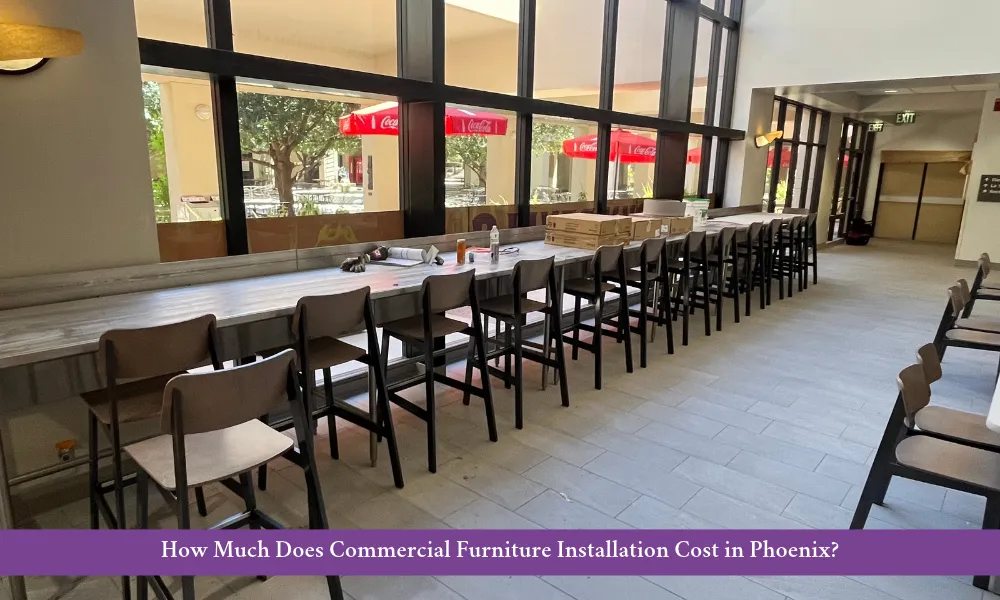
How Much Does Commercial Furniture Installation Cost in Phoenix?

What Are Storage and Warehousing Services, and How Do They Work?

Military Furniture Installation & Relocation: What You Need to Know
How Corporate Moving Services Make Office Relocations Easier

Let Andrews Installation Group Manage & Simplify Your furniture Installation
Connect with our expert team today for efficient installation and moving services designed around your needs.
Contact Us!

Let Andrews Installation Group Manage Your furniture Installation
Connect with our expert team today for efficient installation and moving services designed around your needs.
Contact Us!
Let Andrews Installation Group Manage & Simplify Your furniture Installation
Connect with our expert team today for efficient installation and moving services designed around your needs.
Contact Us!
Let Andrews Installation Group Manage Your furniture Installation
Connect with our team today for efficient installation and moving services designed around your needs.
Contact Us!
Related Blog Posts
Related Blog Posts
Nov 7, 2026
How Storage and Warehousing Reduce FF&E Project Delays
Storage and warehousing keep FF&E projects on track. Learn how a furniture delivery service and FF&E installation services protect your opening date.
Nov 7, 2026
How Storage and Warehousing Reduce FF&E Project Delays
Storage and warehousing keep FF&E projects on track. Learn how a furniture delivery service and FF&E installation services protect your opening date.
Oct 22, 2026
How Much Does Commercial Furniture Installation Cost in Phoenix?
Phoenix furniture installation for a standard commercial project typically runs from a few hundred dollars for a small single-room setup to several thousand for a full office buildout with modular systems.
Oct 22, 2026
How Much Does Commercial Furniture Installation Cost in Phoenix?
Phoenix furniture installation for a standard commercial project typically runs from a few hundred dollars for a small single-room setup to several thousand for a full office buildout with modular systems.
Oct 20, 2026
What Are Storage and Warehousing Services, and How Do They Work?
Storage and warehousing services give project teams a place to receive and hold those items until they’re needed.
Oct 20, 2026
What Are Storage and Warehousing Services, and How Do They Work?
Storage and warehousing services give project teams a place to receive and hold those items until they’re needed.
Nov 7, 2026
How Storage and Warehousing Reduce FF&E Project Delays
Storage and warehousing keep FF&E projects on track. Learn how a furniture delivery service and FF&E installation services protect your opening date.
Oct 22, 2026
How Much Does Commercial Furniture Installation Cost in Phoenix?
Phoenix furniture installation for a standard commercial project typically runs from a few hundred dollars for a small single-room setup to several thousand for a full office buildout with modular systems.